When Google Tells You Your Mother Is Dead
(And You Weren’t Even Worth a Line in the Obituary)
I am writing this not as a historian, not as a neutral party, and definitely not as someone trying to stir drama. I am writing this as a wife who is utterly heartbroken for her husband.
Everything I am sharing here is based on what my husband, Ralph Edward Ritoch, has lived through and what has been relayed to me over the years. I am writing because sometimes silence feels like complicity, and right now, silence feels heavier than grief itself.
I am writing because sometimes silence feels like complicity, and right now, silence feels heavier than grief itself.
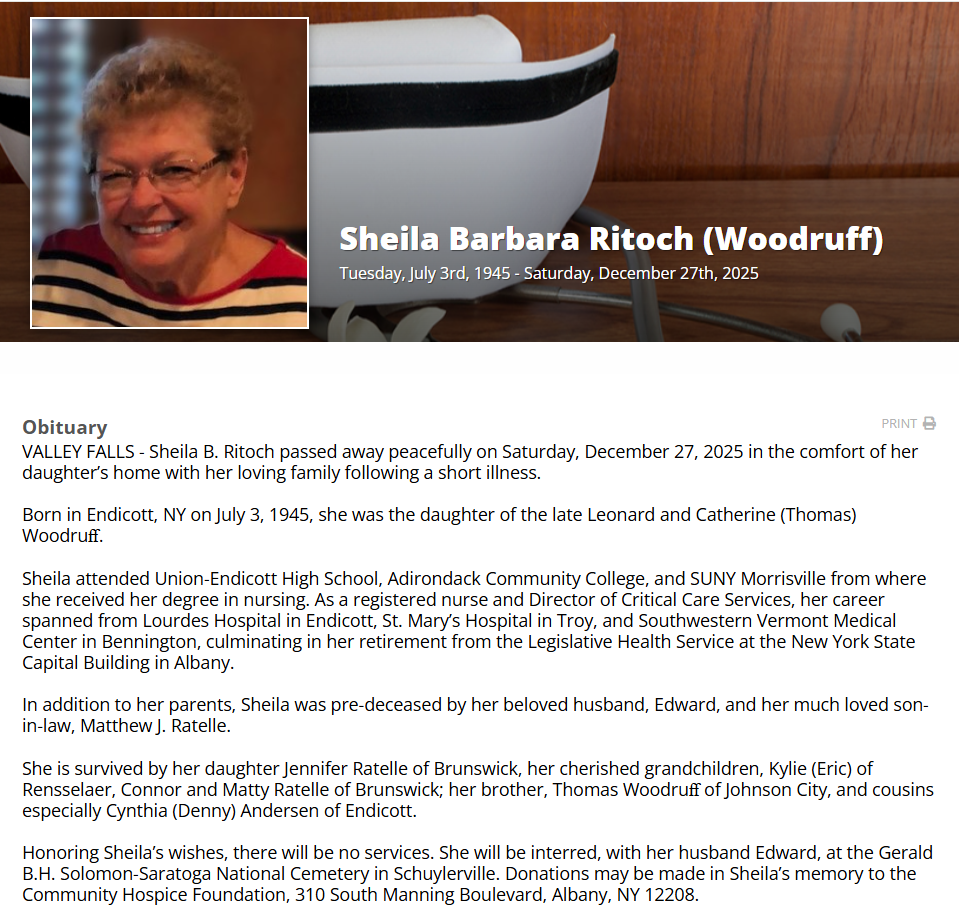
Ralph’s mother, Sheila Barbara Ritoch (Woodruff), passed away on December 27, according to her obituary, after a “short illness.” That line alone already feels strange, because when someone dies suddenly, you’d expect at least a ripple of communication. A message. A call. Something.
There was none.
The Long Goodbye That Never Officially Happened
When Ralph permanently relocated to the Philippines more than sixteen years ago, family tension was already present. He had been very open with me about the sibling issues, particularly with his adoptive sister, Jennifer Ritoch Ratelle.
At one point, she reportedly threatened that if Ralph went through with moving to the Philippines, she would tell their parents to cut him off completely.
He moved anyway.
And interestingly enough—he wasn’t cut off.
Communication with his parents continued. It wasn’t constant, but it existed. His mother would still send the traditional Christmas cards. There were SMS messages. Skype calls. It wasn’t warm, but it wasn’t exile either.
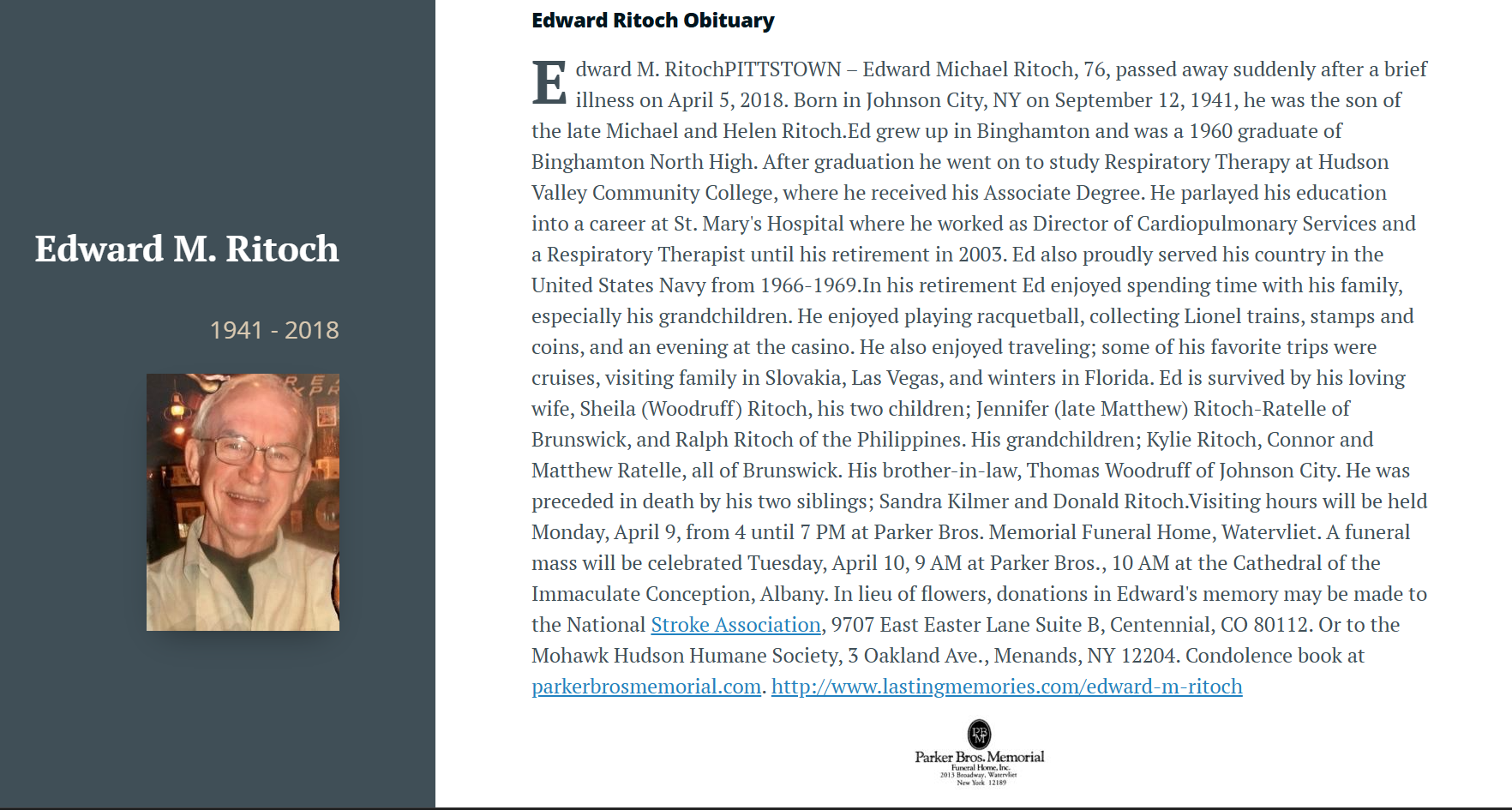
Then their father passed away.
Ralph was informed after the burial.
That alone hurt deeply. But at least—at the bare minimum—his name was included in the obituary. I sometimes wonder if that only happened because his mother was still fully in control at that time.
The Email That Changed Everything
Then came the email. Out of nowhere.
Sheila told Ralph, in writing, that he should no longer contact her.
No explanation. No context. Just a door slammed shut.
Confused and hurt, Ralph did what any child would do—he called his mother long distance from the Philippines to the U.S. and asked what was going on.
And that’s when it became clear: the sister was involved.
Suddenly, accusations appeared—claims that Ralph had “traumatized” her.
No specifics. No opportunity to respond. No chance to defend himself.
Ralph demanded to know what he was being accused of. That conversation ended with his mother hanging up on him.
Just like that.
I remember being stunned. I couldn’t comprehend how a mother could choose to listen to the child who was physically closest, while completely shutting out the one who was thousands of miles away—without even allowing him to understand the charges laid against him.
Years passed. Life moved on, as it does when you’re forced to survive without closure.
The Pretend Reset
Then, oddly, communication resumed.
A Christmas card arrived. A text message followed. It was as if nothing had ever happened.
No apology. No explanation. No acknowledgment of the emotional wreckage left behind.
Ralph didn’t reopen the topic. He knew, deep down, that whatever story had been told about him wasn’t true. He likely believed his mother had figured that out on her own.
This year, on Mother’s Day, we sent a greeting. But there was no reply.
Ralph later had an accident and required surgery. I notified his mother. Still no reply.
This was unusual. Since communication had reopened, she had always responded—until suddenly, she didn’t.
The Search That Changed Everything
One night before Christmas, curiosity got the better of me.
I Googled her full name. Not because I expected anything—but because something felt off.
There was no obituary.
Christmas came and went. New Year came and went. Still nothing.
Then one night, just as I was drifting into sleep, Ralph woke me up.
He told me he had searched for his mother online.
This time, the search did return a result.
His mother had died on December 27.
And her obituary made no mention of him. Not even a line. Not even an acknowledgment that he existed.
Instead, it centered entirely around Jennifer Ritoch Ratelle.
I cannot shake the belief that during Shiela’s illness, someone else gained control of her phone—someone who made sure Ralph’s number was erased, his messages deleted, and his existence quietly removed.
Let me be clear: Ralph is not after anything. He already knew, deep down in his heart, that he had been cut off materially.
What broke him was something else entirely.
The deliberate erasure.
To intentionally leave a son out of his own mother’s obituary is not an oversight. It is a decision.
And I will say this plainly: that kind of act is cruel.
A Grief That Has No Funeral
What I cannot understand—and may never understand—is how someone living a comfortable life in the U.S. can hold so much bitterness toward a brother who chose a simpler life in a third-world country.
Ralph lost his mother without goodbye. Without warning. Without acknowledgment.
No call. No message. No funeral to attend. No name on the page.
I am heartbroken for my husband. Not because of inheritance. Not because of pride.
But because no child deserves to find out their mother died through a Google search.
No child deserves to find out their mother died through a Google search
And while I believe deeply that karma has a way of quietly finding its way back to people, my focus right now is not on whether Jennifer Ritoch Ratelle ever feels the pain she put her brother through, but on standing beside the man I love and holding space for a grief that was never allowed to exist properly.
Some losses don’t come with funerals. Some griefs don’t get flowers. And some wounds come not from death itself—but from the people who choose who gets to mourn.